How to choose the right place for your dog's TPLO in San Diego
It is perfectly normal to feel overwhelmed if your dog has recently been diagnosed with a torn ACL. Here's what to look for when selecting a surgical facility.
Reviewed by Dr. Margaret Wypart, Anesthesiologist · Sept. 2026
What you are actually choosing from in San Diego County?
San Diego County has just under 400 veterinary premises. When we cross-checked that list against a public database, roughly 40% were listed as corporate or investor-backed.1
That does not tell you which hospital provides better care. But it does show how varied the local market is. Depending on where you go, your dog's TPLO may be performed at a large specialty hospital, at an independent surgery center, or at your regular veterinary hospital by a traveling surgeon who comes in for the procedure. In that last case, rechecks and any concerns afterward are usually handled by your regular veterinarian rather than by the surgeon who operated.
Those models can differ in who you actually meet before surgery, who is responsible for anesthesia, who sees your dog for rechecks and repeat x-rays, who picks up the phone on a Sunday, and what the quoted price does and does not include. Those are the differences worth comparing as you work through the suggestions below.
1. Choose a team with strong TPLO experience
Experience matters more than most people realize. When you’re choosing a TPLO team, experience should show up in how often they do the surgery, how clearly they communicate, and how available they are during recovery
- The surgeon performs TPLO surgery every week and can tell you approximately how many procedures they perform each year.2
- The staff explains things clearly from your very first phone call, rather than brushing you off with a “you will learn all that at the consult” response.
- The surgeon is directly available to speak with you on surgery day and throughout the entire healing process.
- They provide ready-to-go pamphlets and tips on exactly how to prep your home for the full 8-week recovery period.
- The team gives you an absolute “yes” when you ask if you can reach out with questions every day, including weekends. Eight weeks is a long time, and questions will come up.
Look closely at Google reviews, not just at the star rating, but at what the reviews are actually about. A clinic may have excellent reviews for vaccines, ear infections, or routine care, but that is not the same as having positive reviews specifically about orthopedic surgery.
2. Where TPLO surgery happens
A 2026 study of more than 900 TPLO procedures found that dogs treated in a dedicated orthopedic surgery center needed implant removal less often than dogs whose surgery was performed as a mobile service in general veterinary hospitals (0.7%, compared with 4.4%, usually because of infection).3
The researchers could not prove exactly why, but they suggested that a dedicated surgery center may have an advantage because the staff works on these procedures regularly and follows the same routine every day. They also pointed to differences in the operating-room environment. In the study, the dedicated center used an operating room reserved for clean orthopedic surgery, with daily cleaning and a regular full disinfection of the room, while the mobile procedures were performed in general-practice operating rooms used for many different types of procedures.
The study suggests that who performs the surgery may not be the only thing that counts. Where it is performed, and how routinely the surgical team handles TPLO, may matter too.
3. Choose the safest anesthesia care possible
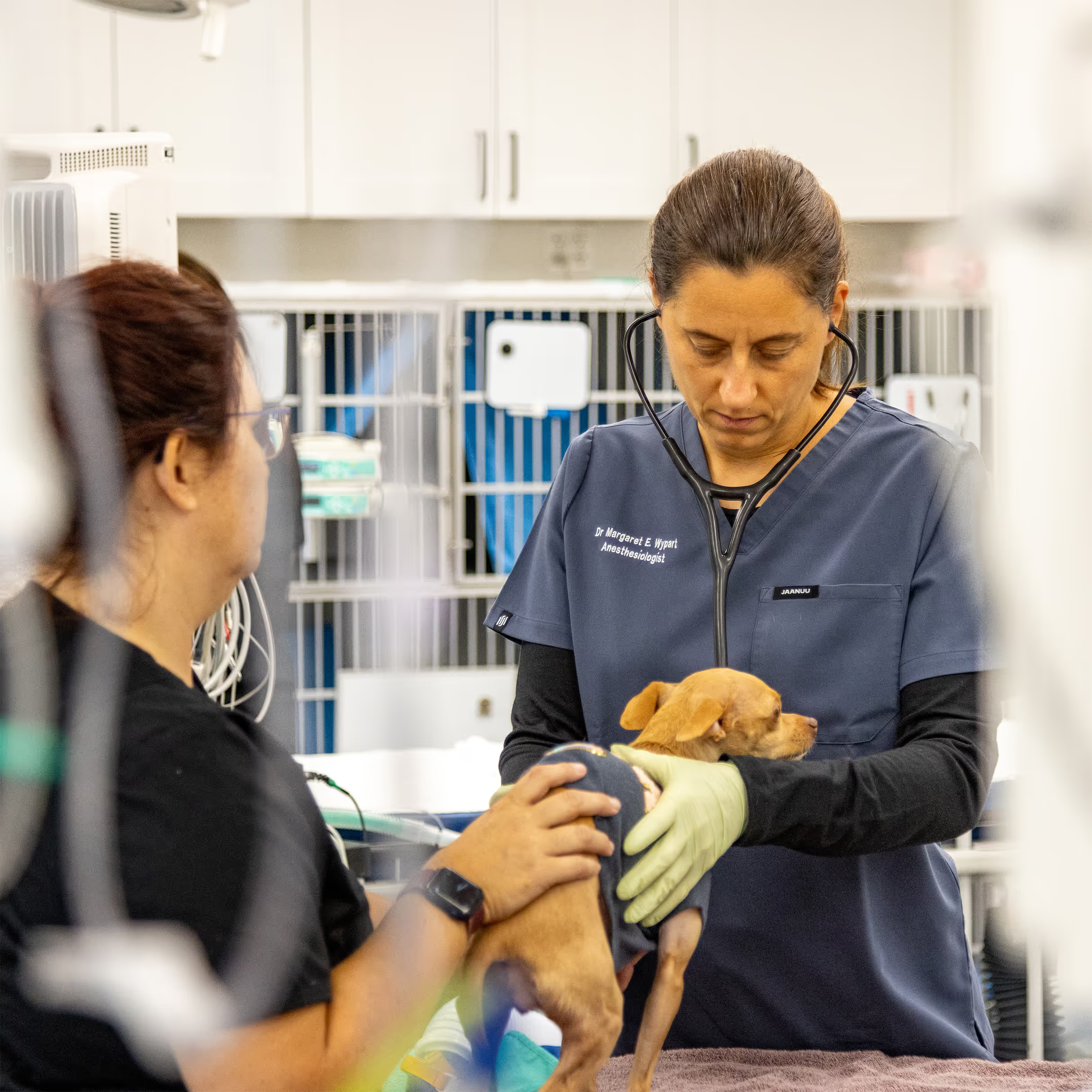
TPLO surgery is not just about fixing your dog’s knee. Anesthesia is just as important for their safety and comfort. Ask who will be responsible for anesthesia and whether that person will be focused only on anesthesia while the surgeon operates.
A two-doctor approach separates those responsibilities:
- A dedicated surgeon whose only focus is performing the orthopedic procedure.
- A separate veterinarian whose only focus during surgery is anesthesia, pain management, and monitoring your dog’s vital signs. Ask whether that doctor is a board-certified veterinary anesthesiologist.
It is also worth asking whether you can speak with the person leading your dog’s anesthesia care before surgery.
For a senior dog, learn how health and anesthesia affect the TPLO decision.
4. Ask how pain will be controlled
Pain management is an important part of TPLO care, and it is worth asking what type of pain control is used, when it begins, and whether nerve blocks are part of the plan. Here is what an ideal pain management plan looks like:
- Nerve blocks before surgery: Instead of just giving numbing medication at the end of the procedure, the team performs nerve blocks to eliminate pain before the surgery begins.
- Ultrasound precision: An anesthesiologist uses an ultrasound to pinpoint the exact nerves carrying pain signals from the leg, placing the medication right where it is most effective.
- Long-lasting comfort: This targeted approach keeps the surgical site numb during the procedure and for 24 to 48 hours afterward, ensuring your dog wakes up completely comfortable and pain-free.
Skillful use of nerve blocks can significantly reduce pain after surgery and help set your dog up for a smoother, quicker recovery.

5. Look for clear and easy communication
Good TPLO care includes clear, responsive communication from before surgery through recovery. Look for a team that offers:
- Upfront and transparent pricing before you even come for a consult.
- Pre-surgery home preparation guide and tips so you can get your house recovery space ready before surgery day.
- Clear explanations of both the procedure and the recovery timeline.
- A detailed week-by-week recovery plan, including physical therapy steps and written discharge instructions, so you are never guessing what to do next.
- Direct access by phone, text, or email, 7 days a week when concerns pop up.
TPLO success does not depend on surgery alone. The eight weeks of recovery that follow matter just as much and a good surgery team knows that. They will set your expectations early and make sure you are prepared, not leave you figuring it out after you get home.
6. Ask how quickly your dog can be treated
Once you know your dog needs TPLO surgery, you don't want to wait weeks for the surgery. The delay may cause muscle weakness and knee stiffness, delaying recovery after the surgery. Look for a surgical team that offers:
- Fast scheduling: You should be able to get a consultation within a week or two, rather than waiting months.
- Same-day surgery options: A dedicated surgery center can often combine your consultation and surgery into a single visit, saving you time and extra trips.
- Surgery without hospital stay: Thanks to modern anesthesia, less invasive surgical techniques, and nerve blocks that keep the leg numb, pets can walk and go home within hours of surgery.
7. Look for value, not just price.
TPLO pricing varies a lot, and the number alone doesn't tell you much. Flat-fee pricing is easiest to compare, but what matters is what's actually in that fee. A well-structured package may include pre-surgery bloodwork when needed, all implants, anesthesia charges, pain management, routine rechecks, follow-up x-rays, and sedation if those x-rays require it.
It's also worth keeping the price in perspective. A very high fee doesn't always mean better surgery. And a surprisingly low fee is worth questioning too.
8. Convenience matters, but only up to a point
Location is worth thinking about, especially since your dog will need follow-up visits and repeat x-rays during recovery. But convenience alone shouldn't drive the decision. You may find it worth driving a little further for a team you feel good about, better anesthesia care, and follow-up support that actually feels thorough.
And sometimes traveling further works in your favor in other ways too. If local surgical capacity is limited, a center a bit farther out may actually get your dog in faster. Pricing can also vary quite a bit by region, so a center outside your immediate area may simply cost less for the same level of care.
Critical questions to ask:
- How many TPLO procedures does the surgeon perform each year?
- Who will oversee anesthesia, is that person a doctor, and will they be dedicated only to anesthesia during my dog’s surgery?
- Will I be able to speak directly with the surgeon before and after surgery? How easy is it to reach the team after surgery, including on weekends?
- Who performs the rechecks, and who will see my dog if there is a problem during recovery?
- How soon can my dog be seen and, if surgery is needed, how quickly can the procedure be scheduled?
- What exactly is included in the quoted price? Important items include pre-op testing, implants, monitoring, pain control, recovery sling, medications, recheck visits, and recheck radiographs.

1 Our estimate, August 2026: a 2025 Western University of Health Sciences research project on veterinary care availability in San Diego County, which identified ~308 veterinary clinics, and 132 San Diego County locations listed in the Private Equity Vet database (privateequityvet.org).
2 Lopez DJ, VanDeventer GM, Krotscheck U, et al. Retrospective study of factors associated with surgical site infection in dogs following tibial plateau leveling osteotomy. J Am Vet Med Assoc 2018;253(3):315-321. PubMed
3 Hayes SN, Franklin AL, Franklin SP. Comparing implant removal rates after tibial plateau leveling osteotomy performed on a mobile service versus in a specialist orthopaedic surgery center: 916 cases. Vet Comp Orthop Traumatol, published online September 2, 2026. PubMed

Ready to Give Your Pet the Best Care?
Schedule a consultation today and see why thousands of pet owners choose us.


37 sec
Book in Just Minutes
Simple and hassle-free scheduling for your convenience.